| ||||
| ||||
Showing posts with label optimization. Show all posts
Showing posts with label optimization. Show all posts
Wednesday, February 18, 2015
Recipes For Practical Customer Experience Design & Optimization – Buyer Legends.


Sunday, February 09, 2014
Conversion optimization, design and copywriting tips.
The daily egg
Conversion optimization, design and copywriting tips
January’s Best: Favorites in Analytics, Conversion, and Copywriting
 by
by The first month of the year has come and gone. Yikes!
Is anybody else wishing that time would just slow down so we could fully embrace life’s wonderful moments? Pretty soon, the holidays are going to happen all over again.
You deserve a break to reflect on all the great things you accomplished this month, so bring out your iPad and take a breather with these 12 amazing blog posts.
Here are, in this marketer’s opinion, January’s best conversion, analytics, and copywriting articles (it’s been an awesome month edition).
Conversion Optimization
1. 7 Tips for Building a Better Web FunnelPost by: WiderFunnel’s Chris Goward via Clarity
Conversion optimization requires constant testing and iteration. And the best way to get started is to, well, start! This blog post walks readers through a marketing framework that is powerful for any business, whether you’re part of a startup or enterprise team.
2. 14 Conversion Rate Optimization (CRO) Terms You Need to Know
Post by: Cate Seago via Optimizely
Jargon can be frustrating and confusing. If you find yourself wondering ‘what the heck it all means,’ don’t worry. You’re not alone. This blog post will give you the crash course you need to learn the basics of CRO.
3. 5 Mistakes Brands Make Selling Direct-to-Consumer
Post by: Linda Bustos via GetElastic
Brands and manufacturers strive to build close relationships with their customers. When executed correctly, this sales channel can evolve into a powerful revenue stream. This post walks through best practices as well as mistakes to avoid.
4. Five Landing Page Videos that Will Make You Jealous
Post by: Me (Shameless Self Plug) via Unbounce
Online videos are the internet’s gift to the world—and are invaluable to your brand’s conversion optimization strategy. If you’re wondering where to get started, look no further than this roundup for inspiration.
Analytics
5. The Future of Mobile Analytics: What Does the Crock Pot Say?Post by: Curtis Silver via the Adknowledge blog
“The landscape of mobile advertising and mobile analytics is changing at a quickened pace. Is your business armed with the knowledge and intuition to keep up?” If your answer is yes, it isn’t good enough. You need to be 10 steps ahead.
6. 12 Signs to Identify a Data Driven Culture
Post by: Avinash Kaushnik via Ocaam’s Razor
Numbers are only half of the analytics equation. The other half? It’s your people. This blog post walks you through the nuts and bolts of building a data-driven culture.
7. Understanding the Limits of Google Analytics
Post by: Caleb Whitemore via Analytics Pros
Google Analytics is the more powerful web analytics tool on the planet. What can’t you do? More than you may realize. This blog post explains why.
8. How to Implement Google Analytics Events in Google Tag Manager
Post by: Eric Fettman via KISSmetrics
Google Tag Manager is designed to minimize your dependency on web developers. This video makes the process as easy as possible.
Copywriting
9. 5 Ways to Offer Awesome Content Without Pulling Your Hair OutPost by: Alexis Grant via Clarity
Does the thought of writing another blog post make you want to hit your head against your keyboard? Don’t let frustration win. Read this blog post instead.
10. The 29 Best Content Marketing Posts of All Time
Post by: Renee Warren via Onboardly
Is it cheating if I link to a blog post with 29 more content links? Be prepared for hours and hours of education.
11. Content Partnerships Fuel Startup Growth
Post by: Kate Gardiner via Contently
Distribution is the heart of content marketing. Startups can amplify their growth by teaming up with fellow content creators. This blog post explains how.
12. 16 Rules to Make Your Emails Rock
Post by: Scott Martin via CrazyEgg
It’s an understatement to say that email is a powerful marketing channel. These 16 rules will help your brand stand out from the endless amounts of spam that consumers face.
You pick #13. What was your favorite read this January?
Read other Crazy Egg posts by Ritika Puri.
Related Posts

About Ritika Puri
Ritika Puri is a San Francisco-based blogger who writes about trends in business, internet culture, and marketing. She’s inspired by the intersection between technology, entrepreneurship, and sociology. By day, she works for a large online media company, and after-hours, she runs her writing consulting business, UserGrasp.Thursday, October 17, 2013
Career Focus: System Engineer
IEEE*USA
today's engineer
November 2011
Career Focus: Systems Engineering
By John R. Platt
Are you an engineer who likes to think outside of the box, possesses leadership and communication skills, and thrives at improving the connections between greater parts of a whole? Then systems engineering might be a good next step for your career.
Back in 2009, Money magazine called Systems Engineering the best career in America based on numbers from the Bureau of Labor Statistics which not only showed a high median salary for the profession—over $87,000—but also predicted a 45 percent growth in systems engineering employment over the first half of this decade. By contrast, electrical engineering jobs are almost stagnant and are expected to grow just two percent in the same period.
Since then, the need for systems engineers has only grown and the job boards are full of listings calling for systems engineering experts. Why the high growth and desire for these professionals? Put simply, the world is no longer simple. "The complexity of modern systems demands systems engineering," says IEEE Fellow Robert Rassa, Director of Engineering Programs for Raytheon SAS and past president of the IEEE Systems Council.
The Systems Engineer: A Sum of His Parts
Systems engineering is an interdisciplinary engineering field that looks at complex systems—think of airplanes as a classic example—through the lens of the entire product life cycle. The systems engineering process begins with establishing a customer's needs and defining the problems that need to be overcome. It then moves to investigating alternatives, modeling the system, integrating various components (often made by multiple teams or suppliers), and launching the system. But the launch is not the end of the job: the systems engineer must then assess the performance of the product or system and re-evaluate to make sure the system will continue to operate properly.
With that in mind, what makes a good systems engineer? "First of all," says Rassa, "you need to have a broad engineering background." He recommends having both discipline experience—electrical engineering, software engineering, etc.—as well as domain experience—space, transportation, communications and the like. "Second, you need to understand a lot of the basics—mechanical engineering, software, logistics, reliability—and have an understanding of how those things play into design."
The third important quality, Rassa says, is leadership. "Leadership is essential. You have to have good communication skills. Consider all inputs from the members of your team and be able to make both good and hard decisions." He says decision-making is often influenced by what is called systems thinking, which he defined as the ability to think in systems-level attributes. "What does this system we're creating have to do in toto and how can I get there, looking at the pieces I have, the pieces I have to design and the pieces I have to change." Since this often involves components from multiple suppliers, some of which might not be changeable, a systems engineer must understand what they can influence and what they can't and then be able to integrate it all into a working system.
Communication skills and the ability to make difficult decisions are critical for all systems engineers, according to Stephanie White, Senior Professor of Computer Science and Management Engineering at Long Island University. Systems engineering, she says, means you're working with a team that can include electrical engineers, software engineers, control systems engineers, and people from any number of other fields. "You're integrating, defining a problem, working with all of the other disciplines to come up with a common understanding of the problem," she says."You have to be able to talk to all of those people and understand their conflicting requirements," then make tough decisions based on your analysis of the situation.
The Need for Systems Engineering
The defense and aerospace industries depend heavily upon systems engineers, but these professionals are also used in many other fields, sometimes under different or similar names. The automotive industry calls them product engineers, for example. But other industries might not even realize they have or need systems engineers.
"I believe it's recognized in a lot of fields," says White. "All organizations are systems. Every organization is complex. If you want to improve your organization, you need systems engineering."
So where are systems engineers needed right now? The first place to look is the job boards for companies supporting the aerospace and defense industries. "The U.S. defense industry really can use all of the system engineers they can find without question," according to Rassa, who says they are also needed by NASA, the FAA, and companies working on next-generation control systems and the smart grid.
"The smart grid is going to be reliant upon systems engineering," says Christos G. Cassandras, head of the Division of Systems Engineering at Boston University and recipient of the 2011 IEEE Control Systems Technology Award. "The grid is a dynamic system, with many pieces connecting, that needs to be optimized and with uncertainties that need to be understood. It's a very good example of why these systems engineering skills are necessary."
Systems engineers will also be highly desired in any industry that relies upon multiple contractors to build and execute large projects. "Systems engineers are responsible for subcontracts and integrating the entire project," says White. "They make sure the project is consistent across all contractors."
While some people still falsely perceive systems engineering as being solely about engineering it really is much broader than that, says Jim Manchisi, Senior Vice President at Booz Allen Hamilton Inc. "When we talk about our systems engineering practice, it's not just engineering but also program management, acquisition management, and program leadership." Booz Allen's systems engineering and integration business concentrates on large government projects, helping them to come in on time and on budget and to achieve the expected levels of performance. "What we do in our group is help the government diagnose where the issues in a project might lie and help solve them."
Taking the field beyond the traditional systems, Cassandras says systems engineers will soon be working on a much more dynamic level of systems. "A system is no longer just a plane or a rocket or a chemical factory," he says. "It can be anything that can be connected through information technology." Even a city could be a system. For example, Cassandras and his systems engineering graduate students just tested a system that could theoretically ease traffic on Boston's busy streets by helping drivers to find and reserve parking spots.
Becoming a Systems Engineer
No one starts their career as a systems engineer. They begin, instead, in almost any other engineering field, where they can learn the skills they will eventually need in systems engineering. Part of that, says Cassandras, is learning to think beyond what he calls the "black boxes" of each engineering discipline. "The difficult part is not the black boxes but the arrows that connect them," he says. "The real complexity is in the arrows, and in how you make the connections."
Rassa says that many people gravitate toward systems engineering and may even find themselves doing it before they realize it. "It's almost not like a conscious decision," he says. "You've been thinking about ramifications. You've been doing out-of-the-box thinking. You can't make a systems engineer out of someone who doesn't have that innate systems thinking ability and natural leadership. If you have those, you have the critical ingredients."
That said, "You can teach people systems engineering approaches," says White. "There are ways of looking at systems to simplify them, and those can be learned."
Cassandras agrees, and says his program and others like it are trying to make systems engineering "a much more rigorous engineering discipline." He teaches three pillars of systems engineering. The first is systems theory. The second is optimization: "Once you design a system and you design how it works, you want to assess its performance, make it better, or redesign it to improve it." The third pillar is randomness and uncertainty, or stochastic process theory. "The world is not predictable, so you need to account for risk. Understand your environment and the uncertainties that affect it," he says.
Booz Allen Hamilton is just one of the many companies looking to hire quite a few systems engineers in the coming months. "For a more junior engineer," says Manchisi, "we'll look at the academic credentials and the kinds of projects that they've gotten involved with." They seek candidates that are end-mission oriented and can understand the client's mission, as well as people who can communicate and work on a team. "I've worked with some top-notch engineers, but if they don't have the ability to collaborate, that's a non-starter," he says.
For more senior positions, Manchisi says they look for natural leaders, people who have filled critical roles in all parts of the product life cycle, and candidates who work well with others. The ideal candidate, he says, "can get four people with different thoughts about solving a problem to come up with a solution that incorporates them all at the best level."
It all boils down to the mind of the engineer: "It doesn't matter what branch of engineering you come from," says Cassandras. "If you have the right philosophy, you can become a very successful systems engineer."
- See more at: http://www.todaysengineer.org/2011/nov/career-focus.asp#sthash.RGGlLEMx.dpuf
today's engineer
November 2011
Career Focus: Systems Engineering
By John R. Platt
Are you an engineer who likes to think outside of the box, possesses leadership and communication skills, and thrives at improving the connections between greater parts of a whole? Then systems engineering might be a good next step for your career.
Back in 2009, Money magazine called Systems Engineering the best career in America based on numbers from the Bureau of Labor Statistics which not only showed a high median salary for the profession—over $87,000—but also predicted a 45 percent growth in systems engineering employment over the first half of this decade. By contrast, electrical engineering jobs are almost stagnant and are expected to grow just two percent in the same period.
Since then, the need for systems engineers has only grown and the job boards are full of listings calling for systems engineering experts. Why the high growth and desire for these professionals? Put simply, the world is no longer simple. "The complexity of modern systems demands systems engineering," says IEEE Fellow Robert Rassa, Director of Engineering Programs for Raytheon SAS and past president of the IEEE Systems Council.
The Systems Engineer: A Sum of His Parts
Systems engineering is an interdisciplinary engineering field that looks at complex systems—think of airplanes as a classic example—through the lens of the entire product life cycle. The systems engineering process begins with establishing a customer's needs and defining the problems that need to be overcome. It then moves to investigating alternatives, modeling the system, integrating various components (often made by multiple teams or suppliers), and launching the system. But the launch is not the end of the job: the systems engineer must then assess the performance of the product or system and re-evaluate to make sure the system will continue to operate properly.
With that in mind, what makes a good systems engineer? "First of all," says Rassa, "you need to have a broad engineering background." He recommends having both discipline experience—electrical engineering, software engineering, etc.—as well as domain experience—space, transportation, communications and the like. "Second, you need to understand a lot of the basics—mechanical engineering, software, logistics, reliability—and have an understanding of how those things play into design."
The third important quality, Rassa says, is leadership. "Leadership is essential. You have to have good communication skills. Consider all inputs from the members of your team and be able to make both good and hard decisions." He says decision-making is often influenced by what is called systems thinking, which he defined as the ability to think in systems-level attributes. "What does this system we're creating have to do in toto and how can I get there, looking at the pieces I have, the pieces I have to design and the pieces I have to change." Since this often involves components from multiple suppliers, some of which might not be changeable, a systems engineer must understand what they can influence and what they can't and then be able to integrate it all into a working system.
Communication skills and the ability to make difficult decisions are critical for all systems engineers, according to Stephanie White, Senior Professor of Computer Science and Management Engineering at Long Island University. Systems engineering, she says, means you're working with a team that can include electrical engineers, software engineers, control systems engineers, and people from any number of other fields. "You're integrating, defining a problem, working with all of the other disciplines to come up with a common understanding of the problem," she says."You have to be able to talk to all of those people and understand their conflicting requirements," then make tough decisions based on your analysis of the situation.
The Need for Systems Engineering
The defense and aerospace industries depend heavily upon systems engineers, but these professionals are also used in many other fields, sometimes under different or similar names. The automotive industry calls them product engineers, for example. But other industries might not even realize they have or need systems engineers.
"I believe it's recognized in a lot of fields," says White. "All organizations are systems. Every organization is complex. If you want to improve your organization, you need systems engineering."
So where are systems engineers needed right now? The first place to look is the job boards for companies supporting the aerospace and defense industries. "The U.S. defense industry really can use all of the system engineers they can find without question," according to Rassa, who says they are also needed by NASA, the FAA, and companies working on next-generation control systems and the smart grid.
"The smart grid is going to be reliant upon systems engineering," says Christos G. Cassandras, head of the Division of Systems Engineering at Boston University and recipient of the 2011 IEEE Control Systems Technology Award. "The grid is a dynamic system, with many pieces connecting, that needs to be optimized and with uncertainties that need to be understood. It's a very good example of why these systems engineering skills are necessary."
Systems engineers will also be highly desired in any industry that relies upon multiple contractors to build and execute large projects. "Systems engineers are responsible for subcontracts and integrating the entire project," says White. "They make sure the project is consistent across all contractors."
While some people still falsely perceive systems engineering as being solely about engineering it really is much broader than that, says Jim Manchisi, Senior Vice President at Booz Allen Hamilton Inc. "When we talk about our systems engineering practice, it's not just engineering but also program management, acquisition management, and program leadership." Booz Allen's systems engineering and integration business concentrates on large government projects, helping them to come in on time and on budget and to achieve the expected levels of performance. "What we do in our group is help the government diagnose where the issues in a project might lie and help solve them."
Taking the field beyond the traditional systems, Cassandras says systems engineers will soon be working on a much more dynamic level of systems. "A system is no longer just a plane or a rocket or a chemical factory," he says. "It can be anything that can be connected through information technology." Even a city could be a system. For example, Cassandras and his systems engineering graduate students just tested a system that could theoretically ease traffic on Boston's busy streets by helping drivers to find and reserve parking spots.
Becoming a Systems Engineer
No one starts their career as a systems engineer. They begin, instead, in almost any other engineering field, where they can learn the skills they will eventually need in systems engineering. Part of that, says Cassandras, is learning to think beyond what he calls the "black boxes" of each engineering discipline. "The difficult part is not the black boxes but the arrows that connect them," he says. "The real complexity is in the arrows, and in how you make the connections."
Rassa says that many people gravitate toward systems engineering and may even find themselves doing it before they realize it. "It's almost not like a conscious decision," he says. "You've been thinking about ramifications. You've been doing out-of-the-box thinking. You can't make a systems engineer out of someone who doesn't have that innate systems thinking ability and natural leadership. If you have those, you have the critical ingredients."
That said, "You can teach people systems engineering approaches," says White. "There are ways of looking at systems to simplify them, and those can be learned."
Cassandras agrees, and says his program and others like it are trying to make systems engineering "a much more rigorous engineering discipline." He teaches three pillars of systems engineering. The first is systems theory. The second is optimization: "Once you design a system and you design how it works, you want to assess its performance, make it better, or redesign it to improve it." The third pillar is randomness and uncertainty, or stochastic process theory. "The world is not predictable, so you need to account for risk. Understand your environment and the uncertainties that affect it," he says.
Booz Allen Hamilton is just one of the many companies looking to hire quite a few systems engineers in the coming months. "For a more junior engineer," says Manchisi, "we'll look at the academic credentials and the kinds of projects that they've gotten involved with." They seek candidates that are end-mission oriented and can understand the client's mission, as well as people who can communicate and work on a team. "I've worked with some top-notch engineers, but if they don't have the ability to collaborate, that's a non-starter," he says.
For more senior positions, Manchisi says they look for natural leaders, people who have filled critical roles in all parts of the product life cycle, and candidates who work well with others. The ideal candidate, he says, "can get four people with different thoughts about solving a problem to come up with a solution that incorporates them all at the best level."
It all boils down to the mind of the engineer: "It doesn't matter what branch of engineering you come from," says Cassandras. "If you have the right philosophy, you can become a very successful systems engineer."
- See more at: http://www.todaysengineer.org/2011/nov/career-focus.asp#sthash.RGGlLEMx.dpuf
Thursday, August 08, 2013
Optimize your App for the App Store.

ADVICESo your company has made a beautiful, functional, easy-to-use app. Hours upon hours have been poured into the design, the user interface, the API, and every conceivable action that the application will perform. You’re proud of your awesome accomplishment, and set it up in the App Store. Your job is finished, right? Well, if you actually want people to download your app, your work has just started. Many people don’t think to optimize their app for the App Store, but implementing SEO into the app itself is a big part of successfully marketing your creation.
Friday, August 02, 2013
Two Words To Turn Ho-Hum into Powerful Copywriting
THE DAILY EGG
Conversion optimization, design and copywriting tips
Two Words To Turn Ho-Hum into Powerful Copywriting
 by
by
143FLARES
Two words are all that stand between you and better copy.
What are they?
I won’t keep you in suspense.
It’s a simple two-word question:
“So what?”
Asking yourself this one simple question will dramatically improve your copy. And yield powerful copywriting.
It doesn’t matter if you’re writing an email to a colleague, a memo to your staff, or a web page selling a humidifier.
Those two words will go far to make sure you’ve got your audience in mind. And, they will make sure you write only that which is relevant to them.
I’m sure it’s not the first time you’ve heard about using the question “So what?” Plenty of great and legendary copywriters have written about it before.
So rather than rehash why it’s such a great question to ask, I thought it’d be good to simply show you its power, for practically every element involved in writing great copy.
The Attention-Grabbing Headline
This the make-it-or-break-it point in your copy. If your headline doesn’t get your reader’s/visitor’s attention right away, the rest of your copy doesn’t matter.
So after you’ve written some copy, start with the headline. Ask yourself, “So what?”
The answer should be in your headline.
The writers over at Cosmopolitan know this very well. Here’s the cover from one of their issues:

Every single headline on that magazine cover screams to be read. It draws you in and quickly passes the “So what?” test.
An easy way to make sure your headline always passes, is to include a benefit, an element of curiosity, or both.
The next line of copy after your headline needs to do the same.
Here’s an example from Reader’s Digest:

The headline certainly passes the “So what?” test, and so does the short copy that follows.
It’s hard to resist the urge to click to read more and find out what else you may not know about dairy’s health benefits.
Make Your Benefits Come To Life
Another way the “So what?” test boosts the power of your copy, is by making your benefits shine.
You’ve heard the mantra, “features and benefits.” Asking “So what?” really helps you draw out the deeper, more emotional benefits your product or service provides.
Legendary copywriter Clayton Makepeace uses this simple tool all the time to help him create sizzling blockbuster promotions.
So how do you do it?
Start by making a list of your product or service’s features. These are the “facts.”
So if you’re selling a yellow no. 2 pencil, some of the features include:
- Eraser on one end
- Graphite core encased in a wooden cylinder
- Yellow
- Around 7 inches in length
Now that you’ve got your features, it’s time to ask “So what?” for each of the features …
Feature: eraser on one end
So what? You can easily correct mistakes. No need to have to grab a new sheet of paper.
Feature: Graphite core encased in a wooden cylinder
So what? If you happen to press too hard and break the tip, no problem. Just sharpen the pencil and you can be back to writing in no time flat. Even if you break the pencil in half, you can still sharpen it and get to work.
Feature: It’s yellow
So what? It’s easy to find and differentiate from your pens and other writing instruments. Save time, since you don’t need to be fumbling through a bunch of stuff to locate it.
Feature: It’s around 7 inches in length
So what? Your pencil will last quite a while. No need to buy a new one for at least a few weeks. And if it ever breaks, you can still use the same pencil, since it’ll most likely still be long enough to use comfortably.
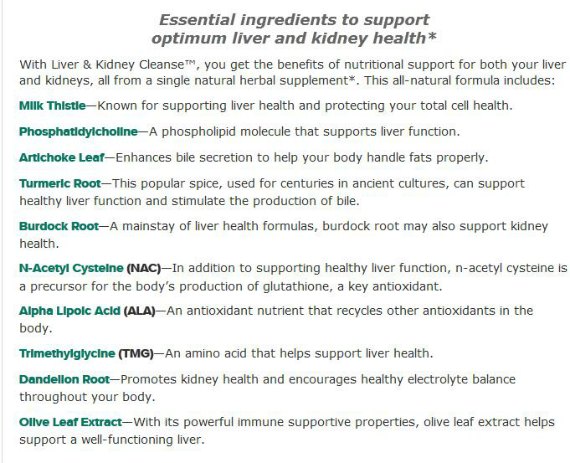
Here’s a classic example of features and benefits from a company selling a health supplement:
Building Trust With Proof And Credibility
How else can using the “So what?” test improve your copy?
Well, if you ask it after every claim or promise you make, you’ll find yourself wanting to back it all up with proof or specifics.
This, of course, will dramatically improve the persuasiveness of your copy.
For example, let’s say you’re a business that sells servers, storage and software solutions to the IT departments of big companies.
In your copy, you could say something like: “Our database software will help you lower operating expenses and improve performance.”
But now let’s ask “So what?”
We can now back it up with a study or some other kind of proof to show that what we’re saying is true.
So this now becomes:
“Based on a recent study done by CIO Magazine, our database software helps you slash operating expenses by 23% and improves database performance by up to 53% with shorter query times. Here’s what our past customers have to say about it: ” (Note: This is a completely made up example, not actual copy from somewhere).
Take a look at this in action on the Motley Fool’s site:

Specifically, they make the claim that:
“…now there’s a way you can get world-class stock recommendations and expert, unbiased advice from top financial analysts by barely lifting a finger.”
Immediately, they explain what it is and why you should believe it.
“It’s called Motley Fool Stock Advisor. This unique investment advisory service was created 11 years ago by Motley Fool co-founders David and Tom Gardner — the renegade brothers Money.com named “among the most widely followed stock advisors in the world.”
So next time you sit down to write, make sure you keep “So what?” on the forefront of your mind.
Those two simple words will go a long way to making your writing clearer, more effective, and more persuasive.

Subscribe to:
Posts (Atom)